
A furnace in San Antonio spends most of the year doing nothing. It sits in a closet or attic from March through November, collecting dust, while the air conditioner carries the house. Then a cold front rolls through, you bump the thermostat to heat, and you find out whether anything went wrong during those eight idle months.
A fall tune-up answers that question before the cold does. This furnace maintenance checklist walks through what a Diamondback technician does during a heating visit, in the order we usually do it, and explains what each step protects you from. If you have a heat pump instead of a gas furnace, there is a section for you near the end.
Why a furnace maintenance checklist matters in South Texas
Short heating seasons cause a specific kind of problem. Parts that run for months straight tend to fail in obvious ways. Parts that sit idle fail quietly. Dust settles on burners and flame sensors. Condensation leaves rust on a heat exchanger. A blower that last ran in February may have a bearing that dried out over the summer.
None of that shows up until the first cold night, which is also the night everyone else in Bexar County discovers the same thing. Scheduling a heating tune-up in October or early November means your furnace gets inspected while our calendar still has room. ENERGY STAR recommends the same timing: a heating check-up in the fall, before contractors get busy with peak season.
Before we touch the furnace
The visit starts at the thermostat. The technician confirms it calls for heat, checks that the setpoint and the actual room temperature agree, and notes whether the thermostat is mounted somewhere that throws off its reading (direct sun, near a lamp, next to a return vent).

Next comes the air filter. Our techs pull it, hold it up to light, and either replace it or show you how dirty it is so you can decide. A clogged filter restricts airflow across the heat exchanger, which makes the furnace run hotter and trip its high-limit switch. Many “my furnace keeps shutting off” calls start with a filter nobody changed since spring. Plan on checking yours every 30 to 60 days during heating season, sooner if you have pets.
The combustion side of the furnace maintenance checklist
This is the part of the visit most homeowners never see, and it is the part that matters most for safety.
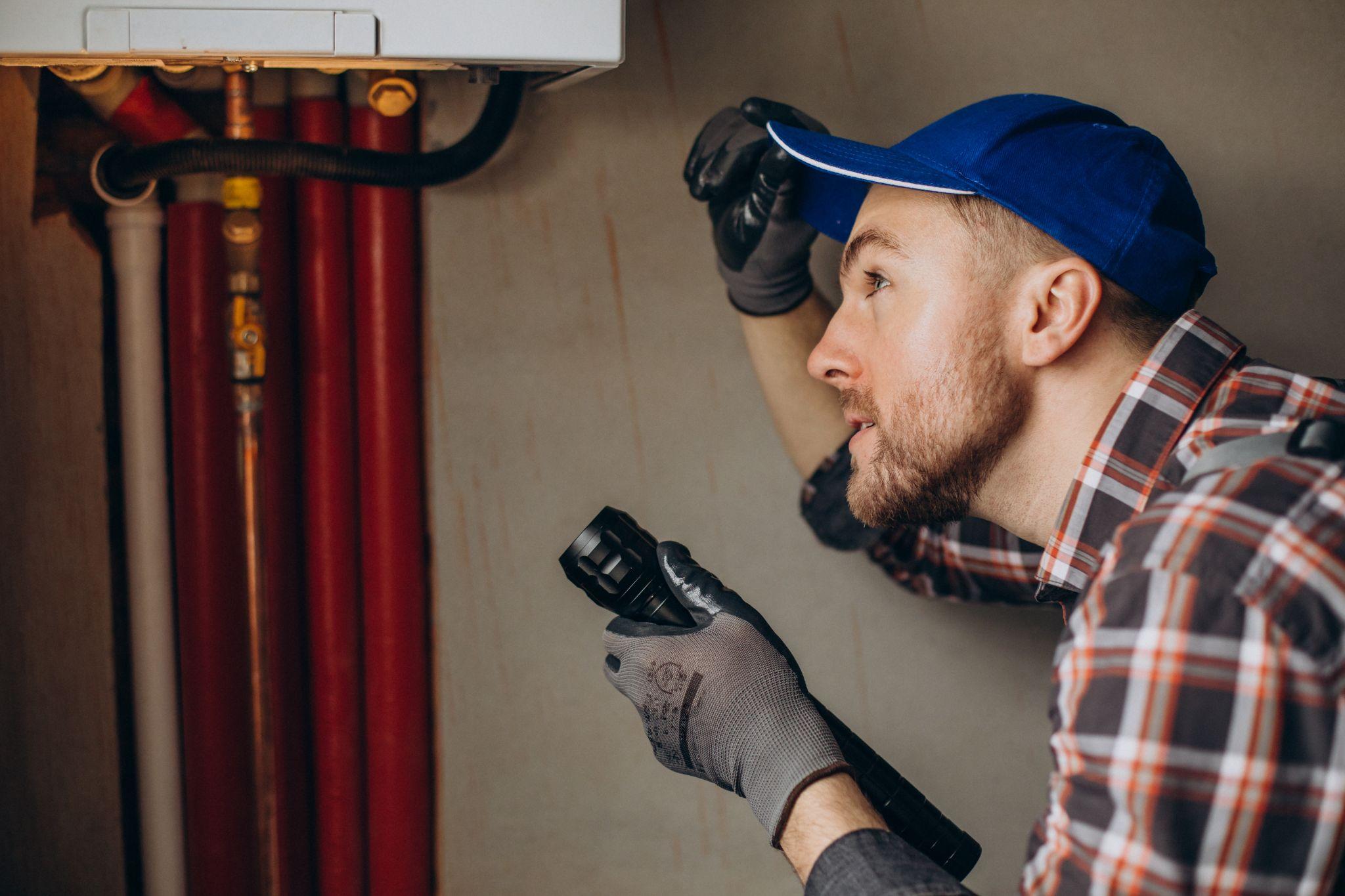
Heat exchanger inspection
The heat exchanger is the metal chamber where combustion gases heat the air that flows into your home. The gases are supposed to stay inside it and exit through the flue. A crack lets carbon monoxide leak into the airstream. Our technicians inspect the exchanger for cracks, rust-through, and discoloration, and this single step is the strongest argument for having a professional do the tune-up rather than handling it yourself.
Burners and flame sensor
Burners get cleaned of dust and rust so the flame burns blue and even. A yellow, lazy flame signals incomplete combustion. The flame sensor, a small metal rod that tells the control board the burner actually lit, gets cleaned as well. A dirty flame sensor is one of the most common reasons a furnace lights, runs for a few seconds, and shuts down again.
Gas pressure and connections
The tech checks gas line connections for leaks and measures manifold gas pressure against the manufacturer’s spec. Too little gas means weak heat. Too much means overheating and wasted fuel.
Ignition system
Older furnaces use a standing pilot. Newer ones use a hot surface igniter or an intermittent spark. Either way, we test that the system lights reliably and on the first try. Igniters that are cracked or coated in debris get flagged, because they rarely fail on a mild afternoon. They fail at 2 a.m. in January.
Venting and flue
Combustion gases need a clear path outside. The technician inspects the flue pipe for disconnections, corrosion, and blockages, and makes sure the draft inducer motor runs properly. In homes where the furnace shares a closet with a water heater, we also confirm the space has enough combustion air.
The airflow and electrical side
Once the burner side checks out, the visit moves to the parts that move air and power through the system.
The blower motor and wheel get inspected and cleaned. A blower wheel caked in dust moves less air, and less air means a hotter exchanger and higher bills. The tech measures the motor’s amperage draw and compares it to the nameplate rating, since a motor pulling high amps is a motor on its way out.
Electrical connections get tightened. Loose connections arc, overheat, and eventually fail. Our techs also check the capacitor on the blower motor and verify the control board responds correctly through a full heating cycle: call for heat, inducer starts, pressure switch closes, igniter glows, gas valve opens, flame proves, blower starts, and the sequence reverses at shutdown.
Safety controls get tested, including the high-limit switch, the rollout switch, and the pressure switch. These are the parts that shut the furnace down when something goes wrong. We want to know they work before you need them to.
Finally, the condensate drain on high-efficiency furnaces gets cleared. These units produce water as a byproduct, and a clogged drain line will shut the furnace off through a float switch.
What the checklist looks like for a heat pump
A lot of homes in San Antonio, New Braunfels, and the surrounding area heat with a heat pump rather than a gas furnace. The checklist shifts accordingly. There is no combustion, so the heat exchanger, burners, and gas pressure steps drop off. In their place, the technician checks refrigerant charge, inspects the reversing valve that switches the system between cooling and heating, tests the defrost cycle, and verifies the auxiliary electric heat strips kick on when outdoor temperatures drop below what the heat pump can handle alone.
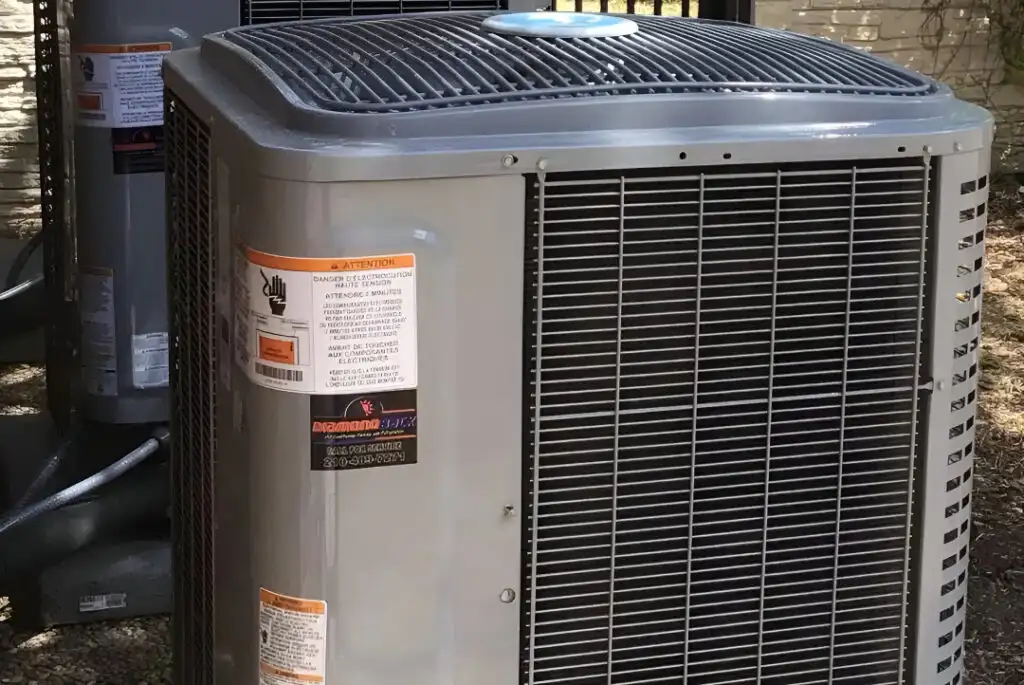
Those heat strips deserve attention. On a 25-degree morning, a heat pump leans on them heavily, and a failed strip means a house that never quite warms up. Our heat pump repair page covers the symptoms to watch for.
What you get at the end of the visit
The technician walks you through what was found, what was adjusted, and anything that should be repaired or watched. If a part is worn but still working, you will hear that too, along with an upfront price for replacing it now versus the risk of waiting. Nobody from our team will pressure you into a repair on the spot.
Members of our HVAC protection plan get this inspection twice a year, once before heating season and once before cooling season, along with priority scheduling and a discount on any repairs that come out of it.
Schedule your heating tune-up before the first freeze
San Antonio’s first freeze lands on November 30 in an average year, and it has come as early as late October. A tune-up in the weeks before that date catches worn igniters, dirty flame sensors, and cracked heat exchangers while the fix is still routine.
Book a heating tune-up with Diamondback Air Conditioning, Heating and Refrigeration, or call (210) 409-7271. Our technicians serve San Antonio, New Braunfels, La Vernia, and the communities within about 30 miles.