
The first cold front of the season arrives in San Antonio the same way every year: a warm Tuesday, a windy Wednesday night, and a Thursday morning where the house is 58 degrees and the furnace has not run since February. That morning is a bad time to learn the igniter is dead.
The fix is to run a short prep routine in late October or early November, while the weather is still mild and a technician can still get to you quickly. Here is how to prepare your furnace for winter in South Texas, what you can do yourself, and what to leave to a professional.
When the first freeze usually hits San Antonio
In an average year, San Antonio sees its first freeze around November 30, with the typical window running from mid-November through early December. The earliest first freeze on record came on October 30, 1917. Areas north and west of the city, toward the Hill Country and Bulverde, tend to freeze a little earlier than downtown.
That gives you a comfortable prep window. If you start in mid-October, you have four to six weeks before you will need the heat for real. Wait until the forecast shows a freeze and you will be calling for service alongside everyone else in Bexar County.
Step 1: Replace the air filter
Pull the filter and look at it. If you cannot see light through it, replace it. A clogged filter starves the furnace of airflow, which makes it overheat and shut down on its high-limit switch. It also pushes dust into the blower and ductwork.
During heating season, check the filter every 30 to 60 days. Homes with pets, allergy sufferers, or a lot of dust need the shorter interval. Write the date on the filter’s edge so you are not guessing next time.
Step 2: Run a test cycle before you need it
On a mild afternoon, switch the thermostat to heat and set it a few degrees above the room temperature. Then listen and smell.
Expect a faint burning odor for the first few minutes. That is dust burning off the heat exchanger and burners after months of sitting, and it should clear quickly. A smell that persists, a sharp electrical odor, or anything that smells like gas means you should shut the system off and call.
Listen for the normal sequence: a small motor starting (the draft inducer), a click, the whoosh of burners lighting, and then the blower kicking on about a minute later. Grinding, squealing, repeated clicking without ignition, or the furnace starting and stopping within a few seconds all point to problems a technician should look at.
Walk through the house and confirm warm air is coming from every supply vent. A room with weak airflow may have a closed damper, a disconnected duct, or furniture blocking the register.
Step 3: Check the thermostat
Confirm the thermostat’s batteries are fresh, if it uses them. Verify it is in heat mode and that the schedule, if you run one, still makes sense for the season. If you set up a cooling schedule in May and never touched it, the heating schedule may be set to something you do not want.
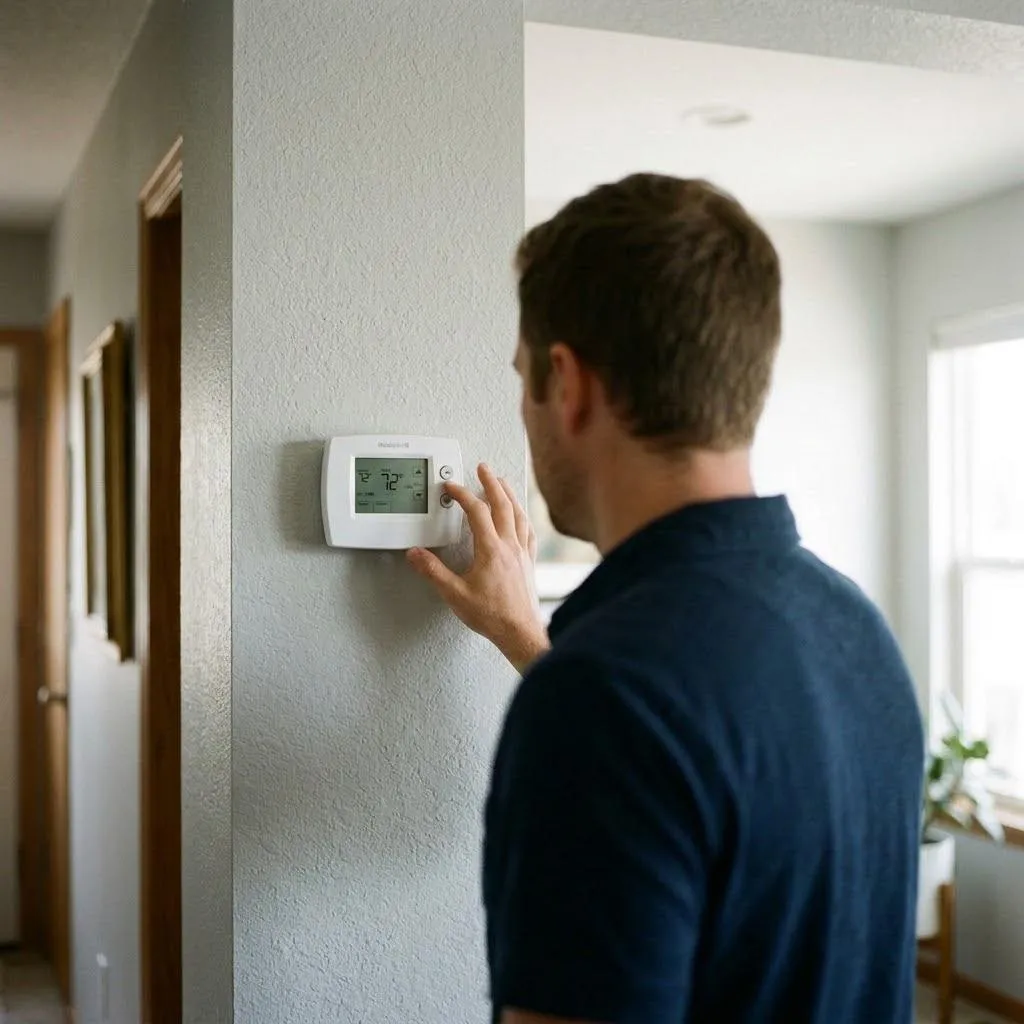
If your thermostat is more than a decade old, this is a reasonable time to consider a programmable or smart replacement. They cost little and let you ease the temperature down while the house is empty without thinking about it.
Step 4: Clear the space around the furnace
A furnace needs air for combustion and room for a technician to work. Over the summer, the closet or attic space around it tends to fill up with storage. Move boxes, paint cans, cleaning supplies, and anything flammable at least a few feet away. Never store gasoline, solvents, or aerosols near a gas appliance.
Check that the vents and registers in each room are open and unblocked by rugs or furniture. Closing vents in unused rooms does not save energy. The system was sized for the whole house, and closing vents raises pressure in the ductwork and can cause leaks.
Step 5: Test your carbon monoxide alarms
This step matters more than any other on this list for a gas furnace. Carbon monoxide is colorless and odorless, and a cracked heat exchanger or blocked flue can push it into your home’s air.
The U.S. Consumer Product Safety Commission recommends CO alarms on every level of the home and outside each sleeping area, tested once a month, with batteries replaced once a year. Fall is the natural time to do it. If you do not have CO alarms, buy them before you run the heat.
Step 6: Look at the flue and the attic
If your furnace is in the attic, as many are around here, take a flashlight up on a dry day. Look for water stains or rust on or around the unit, which can mean a roof leak dripping onto the cabinet or a condensate line that backed up over the summer. Check that the flue pipe runs unbroken from the furnace to the roof with no gaps at the joints, and that nothing is resting on it.
Outside, find where the flue exits the roof or wall and confirm the cap is in place and clear. Birds and wasps like to build in vent terminations over the summer, and a blocked flue is a carbon monoxide risk, not a nuisance.
Step 7: Look at the outdoor unit if you have a heat pump
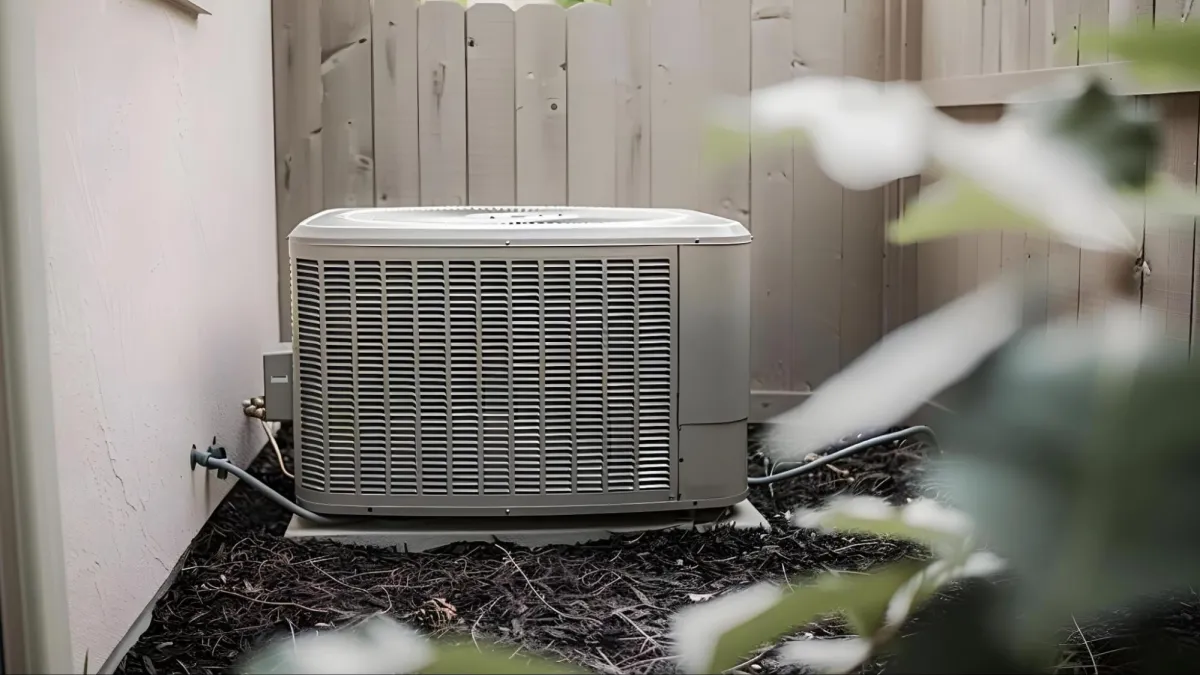
Many homes in San Antonio and New Braunfels heat with a heat pump, which uses the same outdoor unit for heating and cooling. Clear leaves, grass clippings, and debris from around it and keep at least two feet of clearance on all sides. On cold mornings, a heat pump will occasionally run a defrost cycle and produce a cloud of steam from the outdoor unit. That is normal. A unit coated in thick ice that never clears is not, and that calls for a heat pump service visit.
Step 8: Schedule a professional tune-up
Everything above is homeowner territory. What a homeowner cannot safely do is inspect the heat exchanger for cracks, measure gas pressure, clean burners, test the flame sensor and safety switches, or check the flue for corrosion. That is the work of a heating tune-up, and ENERGY STAR recommends scheduling it in the fall, before peak season.
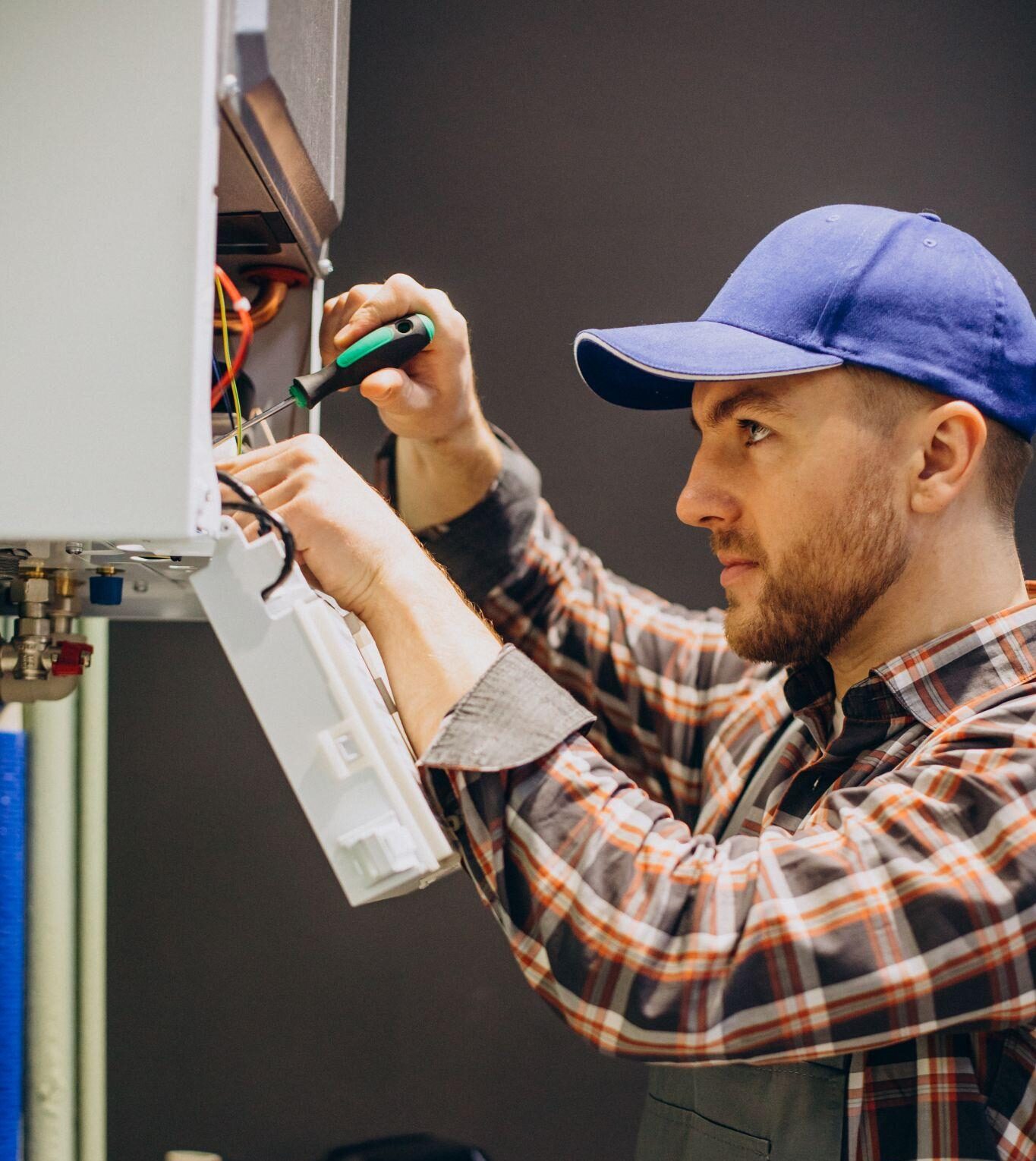
Our technicians run a 21-point inspection during a heating tune-up and walk you through anything that needs attention. Members of our HVAC protection plan get this visit automatically each fall, along with priority scheduling if something does go wrong during a freeze.
Signs you should not wait for a tune-up
Call sooner if the furnace is more than 15 years old and has never had a professional inspection, if it short-cycles (runs for a minute and shuts off, over and over), if a CO alarm has ever sounded, if you see soot or rust streaks on the cabinet, or if your gas bill jumped last winter without a change in usage. Our furnace repair page covers the common failures in more detail.
Get ahead of the cold
South Texas winters are short, but a furnace that fails in the middle of one is miserable. Change the filter, run a test cycle, check the CO alarms, clear the space, and then book a tune-up in the next few weeks while the schedule is open.
Schedule a heating tune-up online with Diamondback Air Conditioning, Heating and Refrigeration, or call (210) 409-7271. We serve San Antonio, New Braunfels, La Vernia, and the surrounding communities.