
When your AC refuses to turn on in the middle of a San Antonio summer, the first instinct is to panic. Before you do, it’s worth knowing that a good number of no-start situations come down to something simple that you can fix in five minutes without calling anyone. Others do need a technician, but knowing how to rule out the easy stuff first saves time and potentially saves you a service call.
Work through these in order, starting with the most common causes.
Check the Thermostat First
The thermostat is the most frequently overlooked starting point when an AC stops responding. If the screen is blank or dim, the batteries may be dead. Swap them out and see if the display comes back before assuming the problem is with the system itself.
If the thermostat has power, check that it’s set to “cool” and not “fan only” or “heat.” It sounds obvious, but settings get bumped accidentally more often than most people admit. Also verify that the setpoint temperature is actually below the current room temperature. A thermostat set to 75 in a 73-degree room won’t call for cooling.
If you have a smart thermostat, check whether it lost its Wi-Fi connection or needs a software update. Some models will go into a default or locked mode that prevents the system from running until the issue is resolved.
Look at Your Circuit Breaker
An AC system that won’t turn on at all, no sounds, no response, nothing, almost always has a power issue. Go to your electrical panel and look for any breakers that have tripped to the middle position or flipped to “off.” Your AC will typically have two breakers: one for the air handler inside and one for the condenser unit outside. Both need to be on for the system to run.
Reset any tripped breaker by switching it fully to “off” first, then back to “on.” If the breaker trips again immediately or within a few minutes of the system trying to start, stop there and call a technician. A breaker that won’t stay on is telling you there’s an underlying electrical problem that needs to be diagnosed before running the system again.
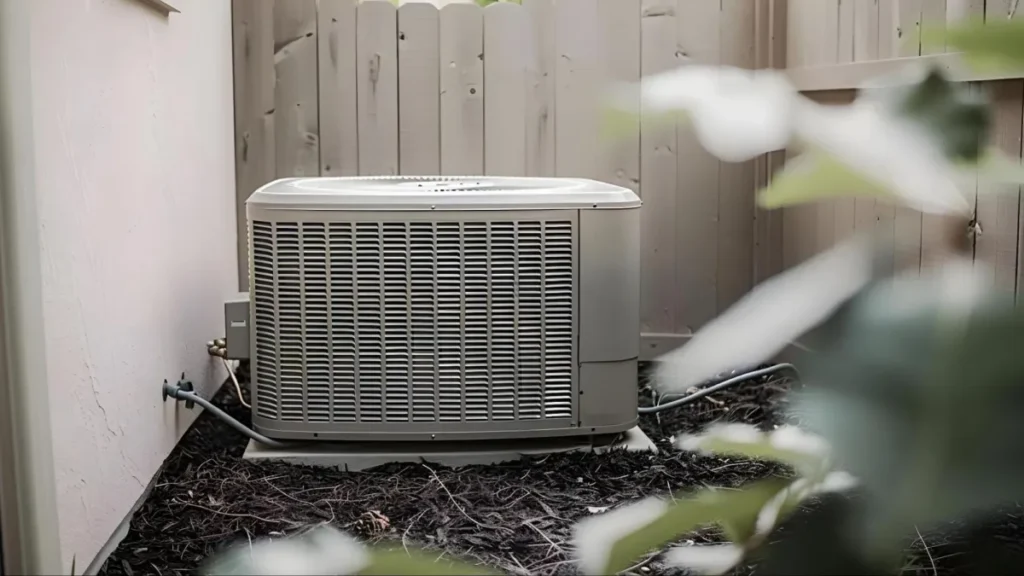
Check the Disconnect Box at the Outdoor Unit
Most outdoor condenser units have a disconnect box mounted on the wall nearby, usually a gray or black box with a pull-out block or switch inside. This disconnect allows technicians to cut power to the outdoor unit safely during service. Sometimes it gets switched off accidentally, or the fuse inside it blows without any obvious sign.
Open the disconnect box and check that the pull-out block is fully seated and in the correct orientation. If your disconnect uses fuses rather than a switch, a blown fuse will look discolored or have a visible break in the metal strip inside. Replacement fuses are available at hardware stores, but if the fuse blew for a reason beyond normal wear, the same underlying problem will blow the new one.
A Full Drain Pan May Have Shut the System Down
Your AC removes moisture from the air as it cools, and that water drains out through a condensate line. If that line gets clogged, water backs up into the drain pan underneath the indoor unit. Most modern systems have a float switch in that pan that shuts the system off automatically when the water level gets too high, protecting your ceiling and walls from overflow damage.
If your drain pan has water in it, that float switch may be the reason your system won’t come on. Clear the condensate line by pouring distilled white vinegar through the access port or using a wet-dry vacuum to pull the clog from the drain line opening outside. Once the pan drains and the float drops back down, the system should be able to start again.
A Dirty Filter Can Trigger a Shutdown
An air filter that’s completely blocked can restrict airflow to the point where the system overheats and triggers a safety shutoff. If you can’t remember the last time you changed the filter, pull it out and take a look. A filter that’s visibly packed with debris should be replaced before you try to restart the system. In some cases, that’s the only thing standing between you and a working AC.
The Capacitor May Have Failed
If you’ve worked through everything above and the outdoor unit still won’t respond, a failed capacitor is a strong possibility. Capacitors are cylindrical components inside both the indoor and outdoor units that store an electrical charge and help the motors start up and run. They wear out over time, and when they fail, the motors they support simply won’t start.
A failing capacitor sometimes gives a warning, you might hear the outdoor unit humming but not starting, or notice the fan blades aren’t spinning even when the unit is trying to come on. A bad capacitor is not a DIY repair, but it is a straightforward fix for a technician and one of the more affordable HVAC repairs.
When to Stop Troubleshooting and Call
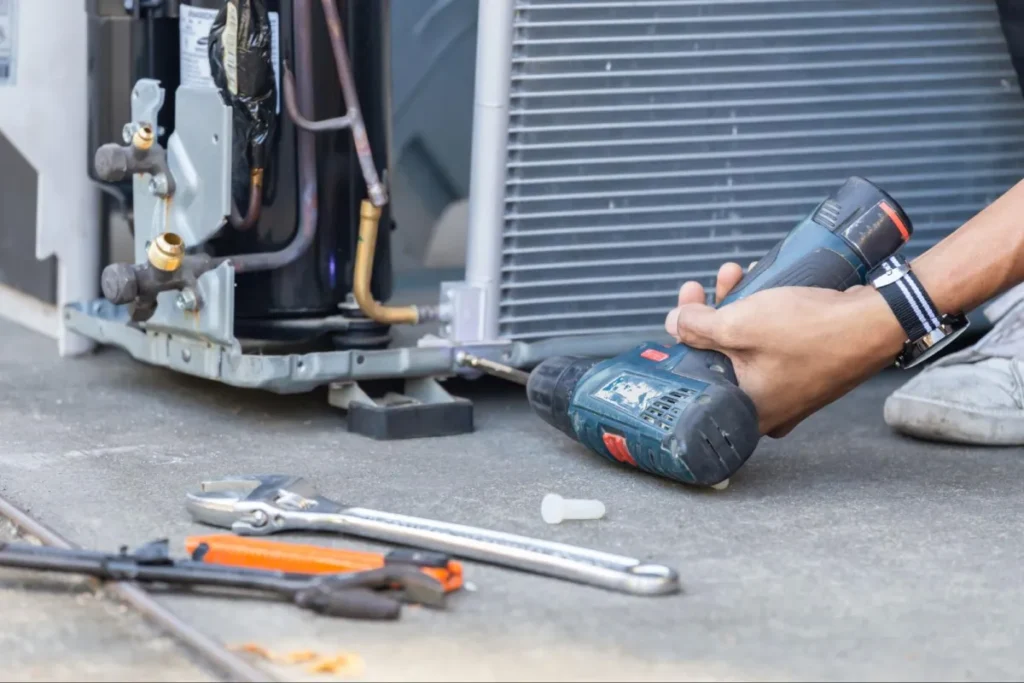
If the breaker keeps tripping, the system hums but won’t start, or you’ve ruled out everything on this list and the AC still won’t come on, the problem is beyond what a homeowner should try to diagnose without proper tools and training. At that point, running the system repeatedly trying to force it to start can cause additional damage to the compressor or other components.
Diamondback offers 24/7 emergency service throughout San Antonio, New Braunfels, La Vernia, and surrounding areas. Call (210) 409-7271 or schedule online and we’ll get a technician out to find the problem and walk you through your options.